
Author: Timoy Nation, Senior Manager, Corporate Solutions
A look at the promise, the pitfalls, and the opportunities for investors if black gold is found beneath our waters
A Question Worth Asking
For decades, Jamaicans have watched oil-producing nations with a mixture of curiosity and envy. We import virtually every drop of fuel we consume, and our energy bill is one of the heaviest weights on our balance of payments. But what if that changed? What if, beneath the waters south of our island, lay billions of barrels of crude oil?
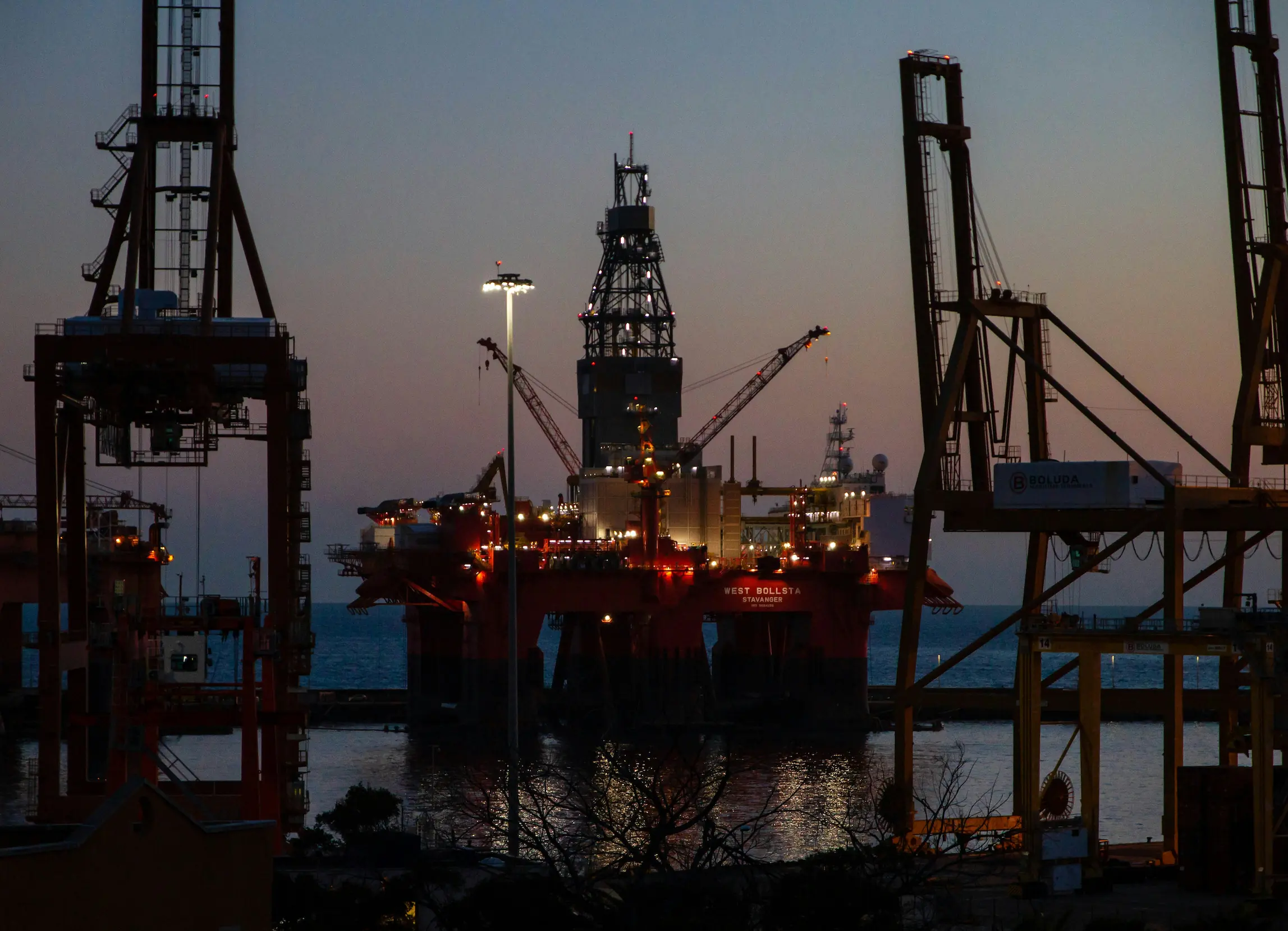
This is not pure fantasy. The Walton-Morant licence, a 22,400 square kilometre offshore block south of Jamaica, is currently held by United Oil & Gas, an AIM-listed exploration company. Independent assessors Gaffney Cline & Associates have audited over 2.4 billion barrels of unrisked prospective resources across eleven prospects (underground location believed to contain commercial quantities of oil or gas), with the company’s wider internal estimates suggesting an average potential of as much as 7 billion barrels as per information provided by the United Oil & Gas – Jamaica Operations website page. The licence has been extended to January 2028, environmental permits have been granted, and seabed coring operations are underway near the key Colibri, Streamertail and Oriole prospects. United itself has compared the block’s geology to ExxonMobil’s Stabroek Block in Guyana, the discovery that transformed that nation almost overnight.
To be clear: prospective resources are not proven reserves. No commercial discovery has been made in Jamaican waters, and frontier exploration carries a high probability of failure. But the question “what if?” is exactly the kind of question investors, policymakers, and entrepreneurs should think through before the drill bit hits pay dirt, not after. Because if oil is found, the decisions made in the first five years will determine whether Jamaica becomes the Norway of the Caribbean or simply another cautionary tale.
The Guyana Comparison: A Transformation Next Door
We do not need to look far for a case study. In 2015, Guyana was one of the poorer countries in South America, with an economy of roughly US$3.5 billion. That year, ExxonMobil struck oil at the Liza field in the Stabroek Block. First oil flowed in December 2019, a remarkably fast four years from discovery to production.
The numbers since then are astonishing. Guyana’s GDP grew 62.3% in 2022, one of the fastest in the world per IMF. Growth was 43.6% in 2024 and 19.3% in 2025, with the economy projected to expand a further 16.2% in 2026. Production climbed from zero to roughly 900,000 barrels per day by early 2026, with capacity projected to reach around 1.7 million barrels per day by 2030. Cumulative oil revenues have already exceeded US$8 billion, and Guyana, a country of fewer than one million people is now ranked among the richest countries in the world by GDP per capita.
For Jamaica, the parallels are tantalising. We are a small island economy of under three million people, with a long history of debt, modest growth, and dependence on tourism, remittances, agribusiness and bauxite. Even a discovery of a fraction of Guyana’s size would be transformational relative to our roughly US$20 billion economy.
But Guyana’s experience also offers warnings:
The speed problem. Money arrived faster than institutions could mature. Guyana established a Natural Resource Fund (its sovereign wealth fund), but by the end of 2025 the fund held only about US$3.25 billion because the government withdrew US$2.46 billion in 2025 alone, spending nearly 100% of that year’s oil revenue on the budget rather than saving it. Critics argue this is exactly how resource wealth gets consumed rather than compounded.
The enclave problem. Offshore oil employs relatively few locals directly. Without deliberate local employment content policies, the money flows to foreign contractors and the average citizen sees rising prices before rising incomes.
The Dutch Disease problem. When oil dollars flood in, the local currency strengthens, making everything else the country produces, tourism, agriculture, manufacturing etc less competitive. Guyana’s non-oil economy has so far grown healthily (13-14% annually), but managing this balance is a constant battle.
Lessons From Other Newcomers and the Old Hands
Norway: The Gold Standard
Norway discovered North Sea oil in 1969 and made one decision that changed everything: the oil belongs to the nation, and the windfall belongs to future generations as much as the present one. Its Government Pension Fund Global, established in 1990, is now worth nearly US$2 trillion about US$350,000 for every Norwegian citizen. The genius lies in two rules. First, all petroleum revenue goes into the fund and is invested entirely outside of Norway, preventing the domestic economy from overheating. Second, the government may spend only the expected real return of the fund (roughly 3% per year) meaning the principal is never touched. Norway effectively converted a finite resource beneath the seabed into a permanent financial endowment.
Trinidad & Tobago: The Cautionary Neighbour
Closer to home, Trinidad & Tobago has produced oil for over a century and gas for decades. It built genuine industrial capabilities like petrochemicals, LNG and methanol but it also illustrates the dangers of over-dependence. When energy prices fell and gas output declined, the economy stagnated, the currency came under pressure, and successive governments had under-saved during the boom years. There does exist a Heritage and Stabilisation Fund, but at roughly US$5-6 billion it is modest relative to a century of production. Trinidad teaches us that producing oil is not the same as converting oil into lasting national wealth.
Other Footsteps Worth Studying
Botswana (diamonds, not oil) shows that a small developing country can indeed manage resource wealth well, through disciplined fiscal rules and reinvestment in education and infrastructure. Timor-Leste built a petroleum fund modelled on Norway’s but drew it down too quickly. Nigeria, Venezuela, and Angola remain the textbook examples of the resource curse, exposing the country excess corruption, currency collapse, and decimated non-oil sectors. The pattern is unmistakable: the difference between blessing and curse is almost never geology. It is governance.
What Jamaica Should Do: A Blueprint Before First Oil
If a discovery were confirmed tomorrow, Jamaica would have roughly four to six years before first oil if we are to use Guyana’s timeline. That window is everything. The priorities would be:
1. Legislate a sovereign wealth fund before the first dollar arrives. A “Jamaica Heritage Fund” should be written into law, ideally with constitutional or super-majority protection before revenues flow, when there is no money yet to fight over. The Norwegian rules are the template: revenues in, investments held abroad in global equities and bonds, and a strict spending cap (a fixed percentage of the fund’s value, not of oil revenue) flowing to the budget. An independent board, parliamentary oversight, and full public reporting of every withdrawal are non-negotiable.
2. Pay down debt first. Jamaica has spent two decades painfully reducing its debt-to-GDP ratio from over 140% to under 70%. Early oil revenue used to retire expensive debt is, in effect, a guaranteed return equal to our borrowing cost which is one of the best “investments” available to the country.
3. Enact strong local employee content legislation. Guyana’s Local Content Act reserves dozens of service categories in areas of catering, transport, security, accounting, insurance and logistics to name a few, for local firms. Jamaica should draft its equivalent now, so domestic businesses, not foreign middlemen, capture the service economy around the industry.
4. Negotiate hard, but credibly. Production sharing agreements signed in desperation are regretted for decades (Guyana’s 2% royalty is widely criticised at home). Jamaica should benchmark fiscal terms internationally, while remembering that frontier basins must still offer attractive returns to attract the billions in capital that offshore development requires.
5. Protect the existing economy. Tourism is and will remain Jamaica’s largest employer. Environmental safeguards for offshore operations are not bureaucratic obstacles; they are protection for the reefs, beaches, and fisheries that underpin a US$4+ billion tourism industry. A single major spill could cost more than years of oil revenue.
6. Manage expectations honestly. From discovery to first revenue is half a decade or more. Governments that pre-spend imagined wealth, borrowing against oil that hasn’t been pumped is repeating Venezuela’s first mistake.
The Investor’s Playbook: Opportunities From Small Savers to Financiers
Here is where the “what if” becomes practical. An oil discovery would create distinct opportunities at every level of the capital ladder and history shows that the biggest gains often go to those positioned before and around the oil, not just in it.
For the Small Investor
The most accessible exposure would come through the Jamaica Stock Exchange. In Guyana, businesses tied to construction, banking, logistics, real estate, and consumer spending boomed alongside oil. A Jamaican equivalent would lift listed banks (financing the expansion), construction and cement companies (building the infrastructure), logistics and shipping firms, and consumer companies (serving a wealthier population). Small investors should also watch for any government savings instruments linked to oil revenue, some countries have issued citizen participation bonds or units so ordinary people share directly in the windfall. Even simply holding shares in a broader fund with JSE stocks, like equity funds, would capture much of the economy-wide lift. And critically: real estate near any onshore base (likely the south coast if you think about Old Harbour, Port Esquivel, or Kingston’s port corridor) historically appreciates dramatically. In Georgetown, Guyana, rents and land values multiplied several times over within five years.
For the Entrepreneur
Offshore oil is an ecosystem, and the operators outsource almost everything. The opportunity list is long: catering and accommodation for offshore crews; trucking and cold storage; waste management; safety training and certification; equipment rental; janitorial and facilities management; security services; IT support; drone and marine survey services; customs brokerage; crew transport; uniforms and PPE supply. In Guyana, locally owned firms that obtained international certifications (ISO standards, safety accreditations) early were first in line for contracts worth millions. The Jamaican entrepreneur’s move today is to study the supply chains in Georgetown and Port of Spain, build relationships, and position to be certified and ready. Joint ventures with experienced Trinidadian energy-services firms are an especially practical bridge as they have the expertise; Jamaicans would have the local standing.
For the Mid-Sized Investor and Professional Class
Lawyers, accountants, engineers, insurance brokers, and HR firms with energy-sector specialisation command premium fees in new oil economies. Mid-sized investors could back industrial real estate (warehousing, laydown yards, fabrication space near ports), private rental housing for expatriate workers, training institutions producing certified welders, riggers, and process technicians, and private equity stakes in local service companies scaling up to win contracts.
For the Financier and Institutional Investor
Banks and institutional players face the largest canvas: project finance and syndicated lending for infrastructure (ports, shore bases, pipelines, gas-to-power plants); underwriting the wave of equity and bond issuance as local companies raise expansion capital; structured trade finance around fuel and equipment flows; and advisory work on the joint ventures, acquisitions, and farm-in deals that follow any discovery. Pension funds and insurers should think about how to gain prudent exposure to the build-out, facilities like infrastructure debt tied to the energy sector can offer long-duration assets that match their liabilities. There is also a sophisticated speculative angle that exists right now: companies holding frontier exploration acreage trade at deep discounts to their success-case value precisely because the risk of a dry hole is high. That is high-risk capital, suitable only for those who can afford total loss, but it is the one way to invest in the “what if” before the answer is known.
A Note on Natural Gas
Any discovery may include significant natural gas. For Jamaica, this could be as valuable as the oil itself: gas-fired electricity could slash our energy costs which is well known to be among the highest in the hemisphere, making every Jamaican manufacturer instantly more competitive and lowering bills for every household. Guyana’s gas-to-energy project, designed to cut electricity costs and replace imported fuel oil, is the model. Cheap, reliable power is arguably the single biggest economic multiplier a discovery could deliver, beyond any cheque from exports.
The Honest Balance Sheet
The pros: transformational government revenue; energy independence and dramatically cheaper electricity; a stronger Jamaican dollar and balance of payments; thousands of direct and indirect jobs; a deeper capital market; the chance to fund education, healthcare, and infrastructure for a generation; and, if managed Norwegian-style, a permanent endowment that outlives the oil itself.
The cons: the resource curse is real and has claimed more victims than success stories; Dutch Disease could quietly strangle tourism and agriculture; corruption risk scales with the size of the prize; environmental risk threatens the very coastline our largest industry depends on; commodity price volatility would whipsaw a budget built on oil; the global energy transition means the window for monetising oil is measured in decades, not centuries and late entrants must move quickly or risk stranded assets; and the social strains of sudden wealth i.e. inflation, inequality and land speculation will hit ordinary citizens first.
My conclusion: Prepare for the Blessing, Guard Against the Curse
Jamaica may never find commercial oil. The odds in any frontier basin favour disappointment, and our national development plans should never depend on what lies unproven beneath the seabed. But the cost of thinking it through now is zero, and the cost of being unprepared if a discovery comes is incalculable.
Guyana shows how fast everything can change and how quickly the hard questions arrive about saving versus spending. Trinidad shows that a century of production does not guarantee lasting wealth. Norway shows that the right rules, set early and defended fiercely, can turn a temporary geological gift into permanent prosperity.
For the Jamaican investor, whether you have ten thousand dollars or ten billion, the lesson is the same. The wealth created by an oil discovery does not flow only through the wellhead. It flows through banks, ports, hotels, warehouses, training schools, law firms, and stock exchanges. Those who study the pattern, position early, and stay disciplined will be the ones who convert a national “what if” into personal and generational wealth.
And if the wells come up dry? Then the exercise will still have been worth it because every strategy above, from strengthening local businesses to deepening our capital markets to cutting our energy costs, is something Jamaica should be doing anyway.